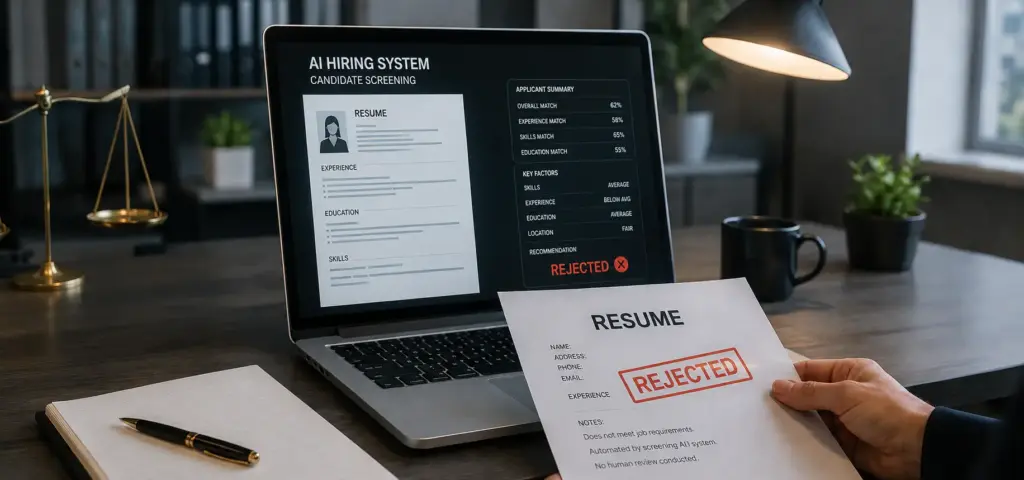
Quitting a job normally means an employee voluntarily decided to end their professional relationship with a company, but what happens when an employer makes working conditions so intolerable that quitting feels like the only realistic option?
California law recognizes this situation as constructive termination and while it is not automatically illegal to pressure someone to quit at work, the reasons behind the forced resignation may be unlawful, especially if it is connected to a violation of state labor codes.
What Is Constructive Termination?

According to the US Department of Labor, constructive termination occurs when working conditions become sufficiently intolerable that a reasonable employee in the same position would feel compelled to resign. The California Supreme Court established the state’s principle of constructive discharge standards in Turner v. Anheuser-Busch, Inc. (1994), explaining that in order to establish constructive discharge, an employee generally must show that:
- The employer intentionally created or knowingly permitted the working conditions
- The conditions were unusually aggravated or sufficiently intolerable
- The conditions existed when the employee resigned
- A reasonable employer would have realized that a reasonable employee in the same circumstances would feel compelled to resign.
What Is the Difference Between Wrongful Termination and Constructive Termination?
Constructive termination concerns how employment ended, because it asks whether circumstances that appeared to be a resignation should legally be treated as an involuntary termination.
Meanwhile, wrongful termination concerns why employment ended and it generally involves a termination that violated a statute, constitutional provision, or fundamental public policy. While these two concepts can overlap that distinction is one of the most important issues employees should understand when evaluating a potential constructive discharge case.
Constructive Termination vs. Quitting
Not every difficult workplace situation becomes constructive termination because California courts recognize that employees may routinely experience disagreements, frustrating supervisors, disappointing evaluations, stressful assignments, personality conflicts, and other workplace problems. Those circumstances generally do not become constructive discharge merely because they make an employee want to quit.
In Herr v. Nestlé U.S.A., Inc. (2003), the California Court of Appeal emphasized that the circumstances generally must be sufficiently extraordinary or egregious to overcome the normal motivation of a reasonable employee to remain employed. Whether a constructive discharge occurred ultimately depends on the complete circumstances surrounding the employee’s resignation, like for example:
What Are Examples of Constructive Termination?
Constructive termination claims are rarely dependent on a single workplace inconvenience, because courts and labor lawyers typically examine the cumulative circumstances and the seriousness of the conditions the employee experienced. Potential examples may include the following.
Severe or Repeated Harassment
Suppose an employee repeatedly experiences sexual harassment from a supervisor. The employee reports the behavior to management several times, but the company fails to intervene and the harassment continues or escalates.
Depending on the severity and the circumstances, resigning after the employer knowingly allows the situation to continue could potentially support a constructive discharge argument, because California law recognizes that even a single incident of harassment may be sufficient to create a hostile-work-environment.
Retaliation After Reporting Unlawful Conduct
If an employee reports racial discrimination or that a supervisor was doing something illegal to HR and shortly afterward, the employee is stripped of important responsibilities, excluded from meetings, and subjected to unjustified disciplinary actions then it can be considered as constructive termination.
The California’s Civil Rights Department specifically states that retaliation for making a complaint can violate FEHA and the state’s whistleblower laws, and this can especially apply to situations where a working condition has become sufficiently intolerable that a reasonable employee would feel compelled to resign.
Refusing a Reasonable Accommodation
Constructive termination claims can also arise in disputes involving disabilities and reasonable accommodations. For example, if an employee with a qualifying disability requested a reasonable workplace accommodation, but management repeatedly refuses it and assigns them duties knowingly that they cannot safely perform it, then it pressures the employee to make the decision to leave. Depending on the facts, these circumstances could implicate California disability discrimination law and potentially support a constructive discharge theory.
Can a Pay Cut or Demotion Be Constructive Termination?

A demotion, reduction in compensation, or reduction in responsibilities could contribute to intolerable working conditions, however, the fact that an employee received an unfavorable employment decision does not necessarily mean the employee was constructively terminated.
In these types of claims, courts consider the totality of the circumstances, meaning a modest change in duties may not meet the standard. However, a substantial demotion accompanied by discriminatory harassment, retaliation, threats, or a deliberate effort to force the employee out could present a much different situation.
Does the Employer Have to Tell You to Quit?
An employer does not necessarily have to tell their employee that they have to quit or else that may open up a variety of labor claims against them. Instead, the employer may create or knowingly permitted circumstances designed to produce the same result.
However, an employee’s suspicion that the employer “wanted me gone” is generally not enough by itself to justify a wrongful termination claim. The circumstances surrounding the resignation and evidence of the employer’s conduct become critical and if you believe your employer is acting unlawfully, it is recommended to consult with a skilled labor lawyer to get further insight.
Should You Quit If You Think You Are Being Constructively Terminated?
Employees should be cautious about resigning solely because they believe their employer is attempting to force them out. Constructive termination has a relatively demanding legal standard, so once an employee resigns, the employer may argue that the resignation was voluntary and that the employee could have remained employed.
With that in mind, if workers are facing intolerable workplace conditions, it is highly recommended that they preserve legally accessible employment records and communications relevant to the dispute. Furthermore, they should also not take confidential, privileged, proprietary, or trade-secret information merely to build a potential case, because that may harm their case.
Forced to Quit Your Job? Speak With a California Employment Lawyer Today

While the conditions of a workplace can vary based on the job and industry, an employer cannot avoid potential liability by making an employee resign instead of formally firing them. If you faced unlawful workplace conduct as an attempt to voluntarily quit, you may be eligible for a wrongful termination claim.
At West Coast Employment Lawyers, our experienced team of labor attorneys can review the circumstances leading up to the resignation and determine whether the conditions may satisfy a constructive termination claim. With over 25 years of experience, our team is committed to delivering the legal representation workers deserve and hold negligent employers responsible for their actions.
Call us at (213) 927-3700 or reach out through our online contact form for a free, confidential consultation.