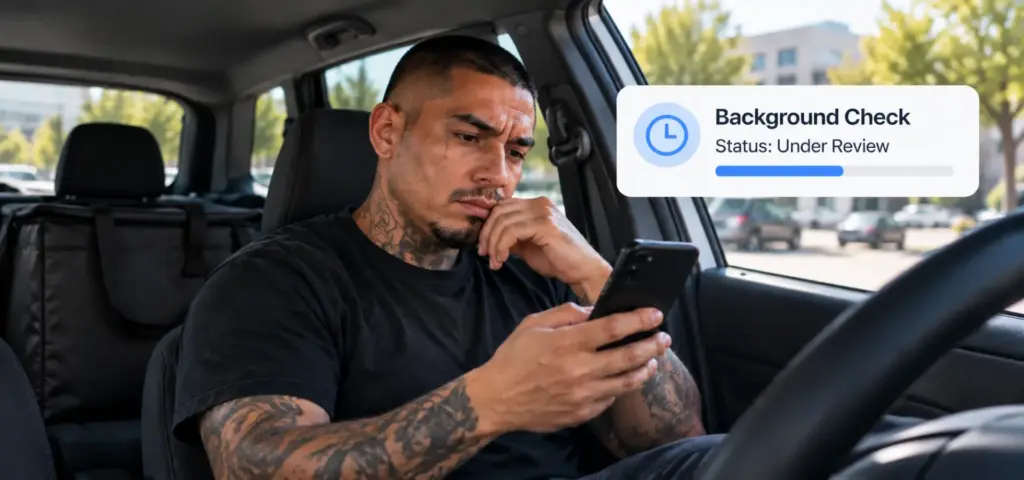
If you have a felony on your record and you are trying to get back on your feet, gig work like Uber Eats can look like an obvious option. No interview, flexible hours, work as much as you want. So the question is a practical one: will a felony stop you from getting approved?
The honest answer is it depends, and approval is never guaranteed. Whether you can drive for Uber Eats with a felony comes down to what the offense was, how long ago it happened, and what the rest of your record looks like. Some felonies are disqualifying, some are not, and in California there are specific legal tools that can improve your chances.
How Uber Eats Runs the Background Checks
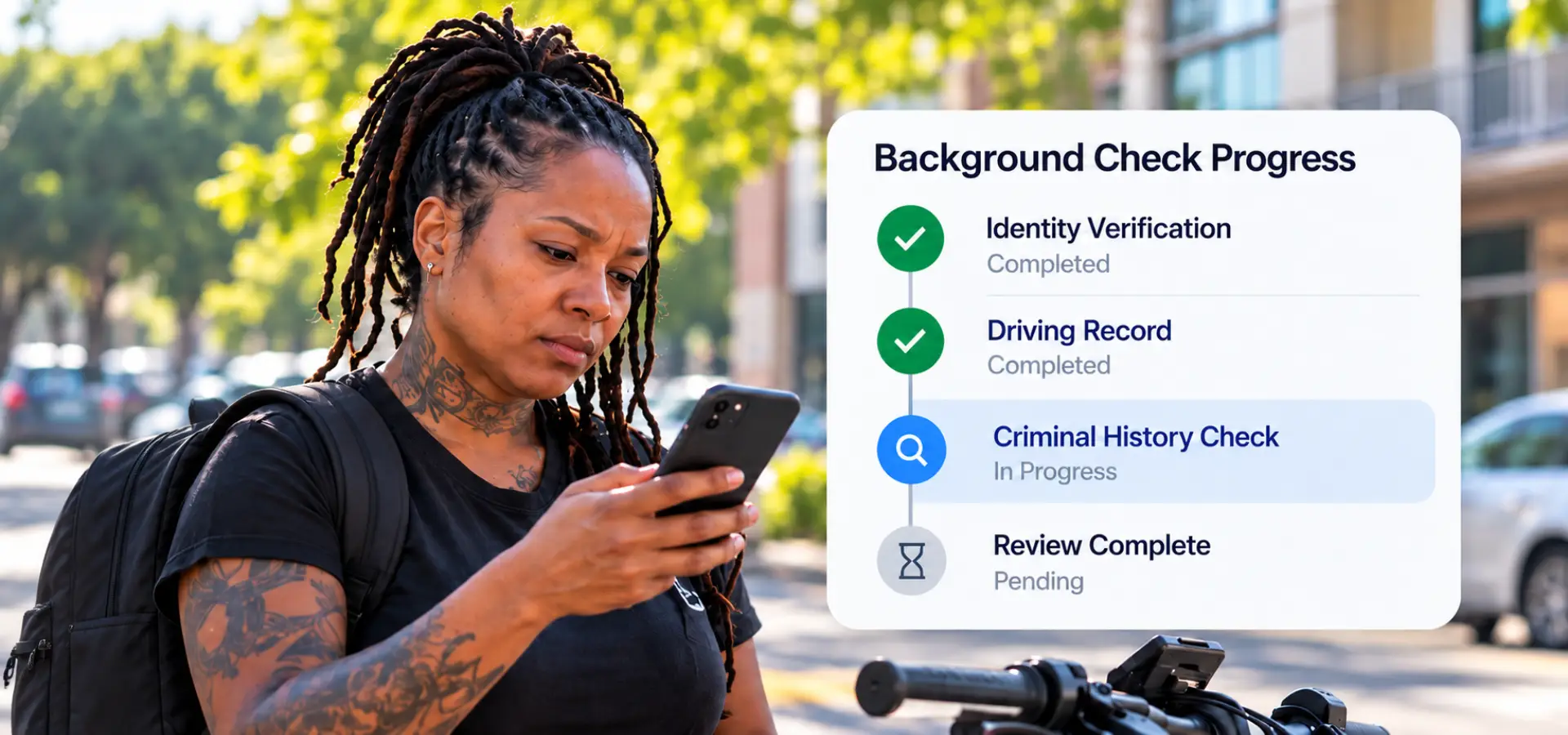
First, an important point: Uber Eats and Uber rideshare use the same driver background check and there is no “easier” delivery-only screening. Whether you want to deliver food or drive passengers, you have to go through the identical criminal and driving-record review, run through a third-party screening company called Checkr.
The check looks at two things:
- Your criminal history, pulled from national, state, and county databases and verified at the courthouse level
- Your motor vehicle record, including DUIs, reckless driving, and license status
Uber also says every disqualifying decision goes through human review, and that it runs continuous monitoring, meaning your record is rechecked periodically even after you are approved.
The 7-Year Lookback Rule for Felonies
For most serious offenses, including many felonies, robbery, and fraud, Uber applies a 7-year lookback period. That means a conviction within the past seven years is generally disqualifying, while an offense older than seven years may not automatically bar you.
The reason for this is because California law limits most criminal background checks to seven years. So in California, the seven-year window is not just Uber’s policy, it is partly required by state law and convictions older than seven years often cannot be reported or considered for most offenses.
The logic Uber cites is research showing that after seven years offense-free, a person’s likelihood of reoffending becomes comparable to someone with no record at all. For a driver with an older, non-violent felony and a clean record since, that seven-year line can be the difference between approval and denial.
Disqualifying Offenses That Always Affect Employment
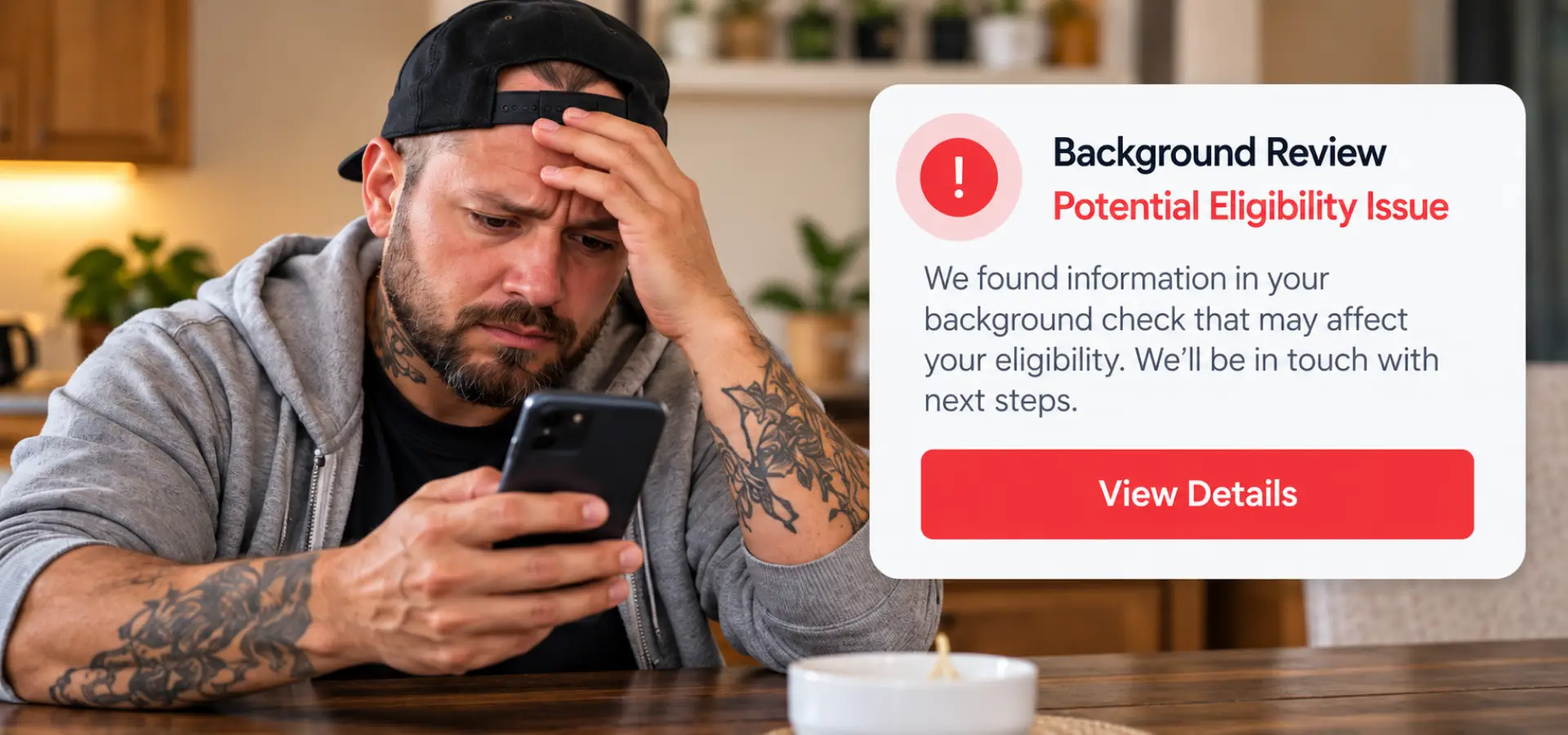
The seven-year rule has major exceptions, because certain serious crimes result such as murder, kidnapping, sexual assault, and violent felonies can result in a permanent ban, no matter how long ago they happened.
It is worth knowing that Uber has been tightening these rules due to late 2025 reporting about gaps in its screening. As a result, the company moved to permanently bar drivers with convictions for violent felonies, sexual offenses, and child or elder abuse regardless of when the crime occurred, and signaled stricter treatment of other serious offenses like weapons charges and restraining-order violations.
The trend is toward more exclusion of serious and violent crimes, not less. As such, if your felony falls into the violent or sexual category, the path is genuinely difficult, and often closed. If it is a non-violent offense, especially an older one, you have real options.
What Actually Influences the Decision
Putting it together, four factors drive whether a felony will block you:
- The type of crime- Non-violent property or low-level drug felonies are treated very differently from violent crimes, sexual offenses, or theft. The further your offense is from anything involving violence, dishonesty, or passenger safety, the better your odds
- How long ago it happened- Inside the seven-year window, most felonies are disqualifying. Outside it, lower-level non-violent felonies may pass
- Your overall record- A single old offense with a clean record since reads very differently from a pattern of repeated convictions. Uber looks for patterns
- Your driving history- Even if your criminal record clears, a DUI, reckless driving, or driving on a suspended license within the past seven years can independently disqualify you
A concrete illustration: someone with a felony burglary conviction from eight years ago and a clean record since may well be approved, while someone with an armed robbery conviction from nine years ago is likely to remain barred because of the violent nature of the offense.
How Proposition 47 Changes Felony Hiring
This is where California offers something many other states do not. Proposition 47, passed in 2014, reclassified a number of non-violent felonies, including certain low-level drug possession offenses and thefts under $950, down to misdemeanors. Crucially, Prop 47 is retroactive, meaning if you were convicted of a felony for conduct that is now a misdemeanor under the law, you can petition the court to have the conviction reduced.
Why this matters for Uber Eats: a felony reduced to a misdemeanor is no longer a felony on your record. Reducing an old qualifying felony to a misdemeanor through a Prop 47 petition can meaningfully improve how your background check reads, removing a felony that might otherwise raise concern.
If your conviction is for a low-level, non-violent offense, talking to a criminal defense attorney about a Prop 47 petition may be one of the most effective steps you can take, not just for Uber but for employment, housing, and licensing generally.
(Prop 47 reduction is a criminal-court process, separate from employment law. An employment lawyer is not the right professional to file that petition, but it is worth knowing the tool exists.)
Your Rights Around Criminal History in California
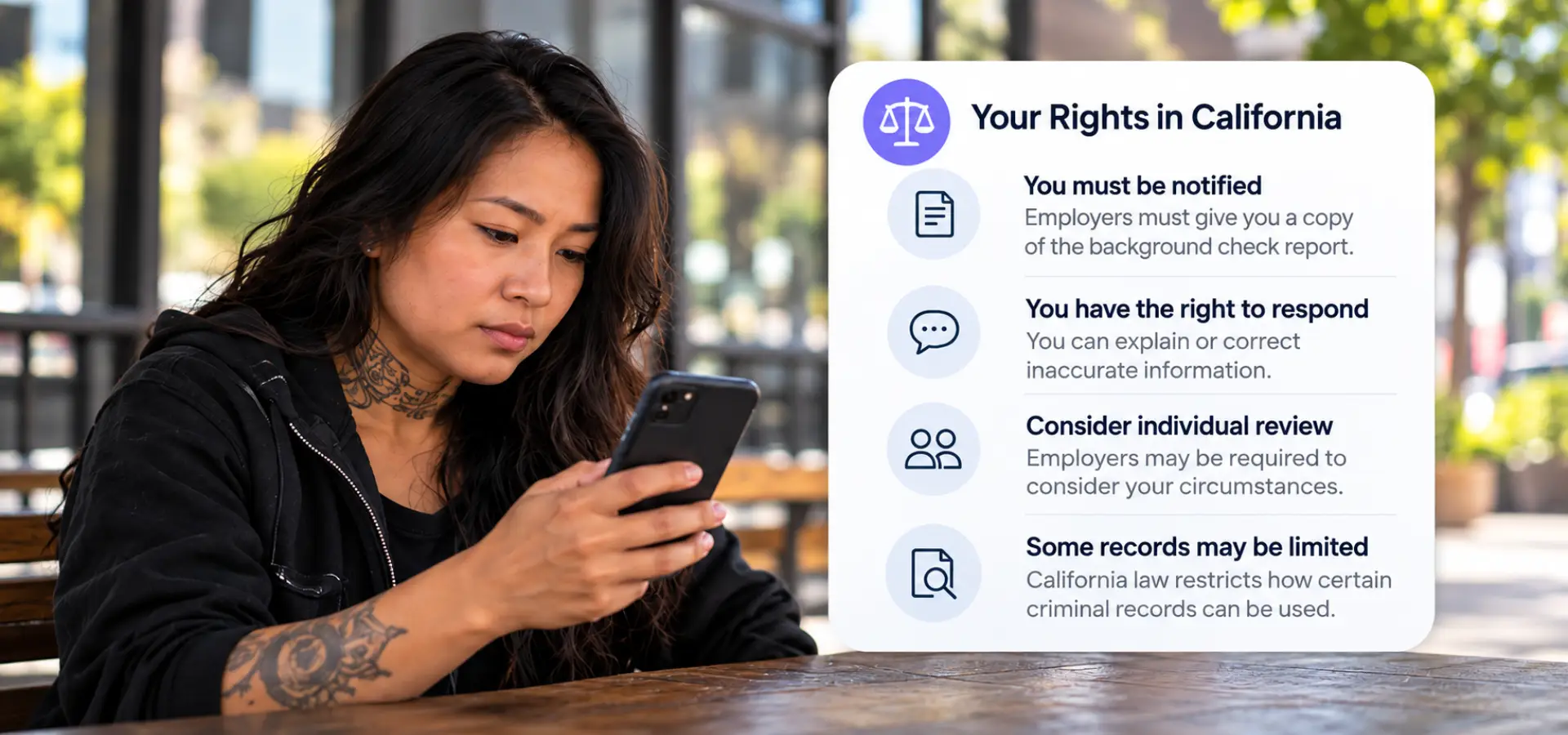
Even though Uber drivers are classified as independent contractors rather than employees, it is worth understanding the broader protections California gives people with records, because many readers asking this question are weighing gig work against traditional jobs.
California’s Fair Chance Act (often called “Ban the Box”), in effect since 2018 and strengthened by regulations in 2023, generally prohibits employers with five or more employees from:
- Asking about conviction history before making a conditional job offer
- Considering arrests that did not lead to conviction, sealed or expunged convictions, or diversion program participation
- Rejecting an applicant over a conviction without first doing an individualized assessment of whether the offense actually relates to the job, and giving the applicant a chance to respond
These rules are aimed at traditional employment relationships, so their application to gig-platform contractor approvals is legally murkier. But if you are also applying for regular W-2 jobs and an employer pulls your record, rejects you without the required individualized assessment, or asks about your history too early, that may violate your rights. Our overview of the labor laws every California worker should know covers the baseline protections, and if you believe an employer crossed a line, our guide on common violations of the California Labor Code is a useful starting point.
Practical Steps to Improve Your Odds
If you want to drive for Uber Eats and you have a felony record, a few concrete moves help:
- Know what is actually on your record- Pull your own background report so there are no surprises, and check for errors, which are common
- Explore a Prop 47 reduction- With a criminal defense attorney if your offense was a low-level, non-violent felony
- Wait out the seven-year window- If you are close to it, since the math changes significantly once an older non-violent offense passes that line
- Keep your driving record clean- A recent DUI or major violation can sink your application even if your criminal record clears
- Be patient with the process- If your check is flagged for review, it can take longer, and you can check status through the Uber Driver app or the Checkr candidate portal
Talking to West Coast Employment Lawyers About Your Situation

Trying to rebuild your life after a felony conviction is hard enough without running into closed doors at every turn, and gig work is one of the few options that does not require clearing a traditional interview process. Whether Uber Eats approves you will depend mostly on the specifics of your record and Uber’s own policies, which the company controls.
But if you are also pursuing regular employment and you believe an employer used your criminal history against you in a way California law does not allow, whether by asking too early, skipping the required individualized assessment, or rejecting you over a record they were not permitted to consider, that is a situation worth reviewing. West Coast Employment Lawyers offers a free, confidential consultation to look at how your criminal history was handled and explain whether your rights under California’s Fair Chance Act were violated.
Call us at (213) 927-3700 or reach out through our online contact form for a free, confidential consultation.