California Governor Gavin Newsom signed new AI workplace legislation on September 30, 2026. These new California AI employment laws (2026) covers how employers may use artificial intelligence, automated decision systems, and workplace surveillance tools. The new legislation includes protections involving AI-driven employment decisions, workplace monitoring, and technology-related layoffs.
As the state continues to develop its AI framework, employers and employees should know how these laws may influence the workplace. Among the new measures are AB 1883 (AI-powered workplace surveillance), SB 947 (regulates certain automated decision systems used for discipline and termination), and SB 951 (notice requirements for AI-related layoffs).
What Employers Should Know About California’s New AI Rules
California’s new AI regulations go over additional employer responsibilities in terms of how they use AI in the workplace. The regulations define requirements involving both ADS tools and ADS data while employers may need to consider how these particular systems affect employment decisions and if they impose more obligations on an employer.
The Labor Commissioner’s Office may play a significant role in enforcing such obligations, and employers should understand whether an available defense applies when it comes to responding to any type of AI alleged violation.
AB 1883: New Rules for AI-Powered Workplace Surveillance

AB 1883 prohibits employers from using a workplace surveillance tool that uses AI to recognize, infer, or make predictions about an individual’s emotional state. The law also restricts the use of such tools to gather neural data, because this comes as emerging technologies are giving employers access to increasingly large amounts of employee information that goes beyond recording employee activity
For instance, an AI-powered system could potentially analyze facial expressions, voice patterns, movements, reaction time, or other physical characteristics and use these details to create predictions about a worker’s emotional state. That is where AB 1883 comes in to address this type of AI use. It contains several provisions that limit its scope while also providing exceptions for certain uses that may be reasonably necessary to ensure safety or comply with specified federal requirements involving aircraft development and national security, military, space, or defense purposes.
What Does AB 1883 Mean for Employees?
For employees and workers, AB 1883 provides additional protections concerning certain forms of workplace monitoring. The law recognizes that workplace surveillance can involve advanced data processing techniques rather than relying on a supervisor’s direct observations. Employers may still use many forms of workplace monitoring as long as they are used for legitimate purposes. However, an employer cannot assume that such an objective automatically allows every form of AI surveillance.
The law also gives the Labor Commissioner enforcement authority and employers that violate AB 1883 may face civil penalties of up to $500 per violation. This may create another source of employer liability when covered surveillance technology is used in violation of the new regulations.
SB 947: California’s “No Robo Bosses Act”

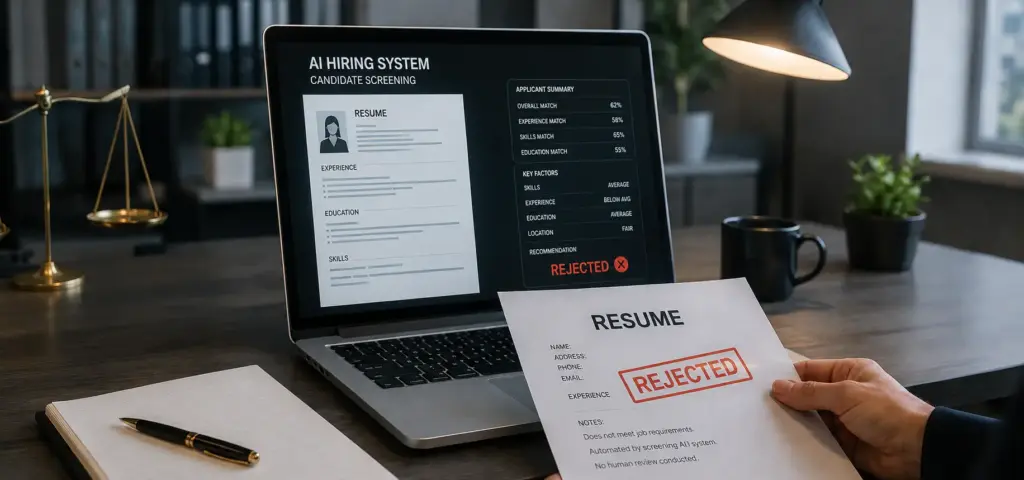
SB 947, known as the “No Robo Bosses Act,” regulates employers’ use of automated decision systems (ADS) in the workplace. An ADS uses technologies, such as machine learning, artificial intelligence, or data analytics to create scores, classifications, or recommendations that support or replace human decision making.
With that in mind, employers cannot rely solely on an ADS for disciplinary or termination decisions and if an employer is relying on an ADS, a person must verify the assessment using relevant information, such as evaluations, work product, or personnel files. SB 947 also restricts using an ADS to identify protected characteristics or predict whether a worker will exercise a legal right and then punish the worker based on that information.
How Does the No Robo Bosses Act Regulate Automated Decisions?
The “No Robo Bosses Act” (SB 947) does not ban employers from using automated decision systems (ADS), but it limits how they may be used in certain employment decisions. When an employer primarily relies on an ADS to discipline or terminate a worker, the employee must generally receive written notice explaining that the system was used and that a human reviewed and confirmed the decision.
Employers also cannot use an ADS in a way that violates existing employment or civil rights laws. Automated systems may not be used to discriminate based on protected characteristics, infer certain protected traits for unlawful purposes, or predict that a worker will exercise a protected legal right and then take adverse action because of that prediction.
Employers may still face liability when an AI-assisted decision results in unlawful discrimination, even if the recommendation originated from software rather than a human manager. The California Civil Rights Department (CRD) continues to enforce these protections, and anti-bias testing does not automatically shield an employer from liability.
SB 951: AI-Related Layoffs and California WARN Notices

SB 951 goes over layoffs involving artificial intelligence and other automated technologies by amending California’s Worker Adjustment and Retraining Notification (Cal/WARN) Act requirements. The new law requires certain employers to give additional information when a covered mass layoff, relocation, or termination is caused in whole or substantial part by AI or automated technology.
When the new requirements are effective, employers will have to provide information pertaining to technology displacement, including the number and classification or occupation of affected workers and their job location. The notice must also identify the job functions that were automated, the category or type of AI or automated technology involved, and the tools responsible for the displacement.
What Does SB 951 Mean for Workers?
For workers, SB 951 provides additional information when AI or automated technology plays a major role in a covered Cal-WARN job loss. Rather than just getting a notice that their employment is ending, affected individuals may receive information explaining how technology contributed to the change. The notice must also state at the top, “This notice is for a technology displacement”, because this can help workers understand whether AI use was connected to the loss of their jobs and what workplace issues led to the employment decision.
The law also gives California additional details about technology-related layoffs and developments in AI-driven employment. SB 951 addresses technology-related disruptions in hiring and requires the Employment Development Department (EDD) to perform related duties and reporting. Existing WARN Act requirements and remedies continue to apply where necessary, which may include claims involving lost wages and benefits when an employer does not meet applicable notice requirements.
Updates to California’s Existing AI Employment Regulations

California’s existing Employment Regulations Regarding Automated Decision Systems were adopted under Title 2 of the California Code of Regulations, including 2 CCR § 11008.1 and amendments to several existing sections. The regulations took effect October 1, 2025, and covers how California’s existing Fair Employment and Housing Act (FEHA) protections apply when employers use automated-decision systems, algorithms, and artificial intelligence when it comes to employment.
The regulations indicate that an employer or other covered entity may go against California law when an ADS or selection criteria discriminates against an applicant or employee based on a trait that is protected by FEHA. They also require employers and entities to maintain employment records, such as automated-decision system data, for at least four years. Furthermore, ADS assessments that elicit information about a disability may constitute unlawful medical inquiries under the regulations.
The California Civil Rights Council updated these ADS employment regulations in 2026. These regulatory changes are separate from AB 1883, SB 947, and SB 951. Collectively, the existing FEHA/2 CCR regulations and the new bills create a more expansive framework governing employers’ use of AI and automated decision systems in California workplaces.
California’s Growing AI Regulations
California continues to develop regulations that govern the use of AI in the workplace as new developments in AI and systems ADS continue to grow and become more common. These rules consist of several provisions that address how employers use automated technologies and how employees may be impacted by such systems.
Employers can take similar proactive efforts to identify potential issues involving AI systems, like testing to evaluate whether automated tools produce either discriminatory or inaccurate results. Employees may also be able to elicit information about how an AI system was used when it took a hit on their employment.
Protecting Your Rights in an AI-Driven Workplace

With companies increasingly using AI tools in the workplace, employees may have questions about how it can affect their employment and workplace rights. If you believe an employer’s use of AI contributed to some form of employment discrimination or unfair decisions that violate California laws, you may have legal options available to pursue.
At West Coast Employment Lawyers, our employment attorneys can review your situation, go over your rights, and help you determine whether your employer’s conduct went against the state’s employment regulations.
To set up a FREE consultation, we invite you to connect with us today by calling (213) 927-3700 or filling out our convenient online contact form.