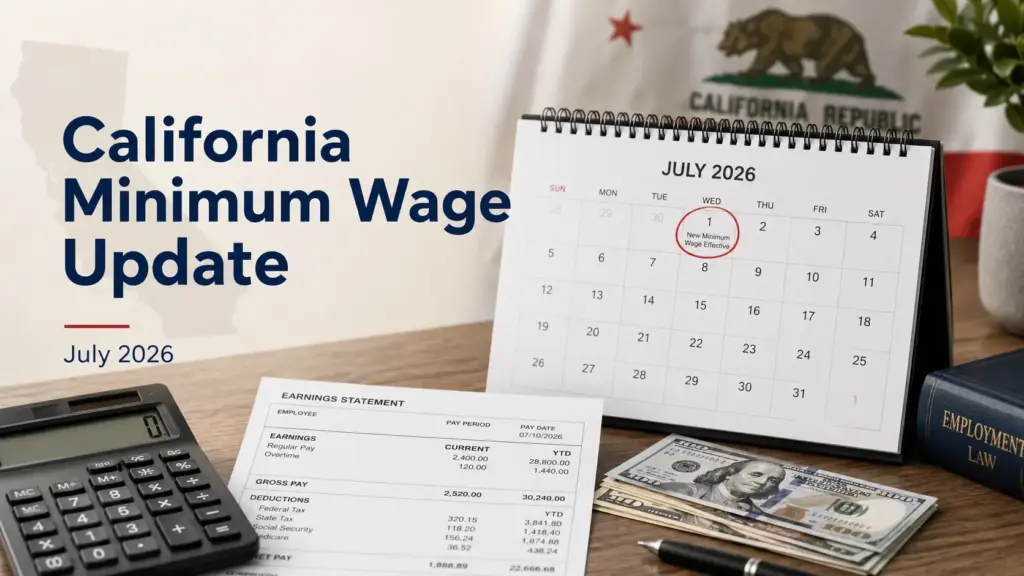


California has long maintained one of the highest minimum wages in the country, but the state’s wage laws continue to evolve. While California’s statewide minimum wage already increased to $16.90 per hour on January 1, 2026, another round of important wage increases will take effect beginning July 1, 2026 for employees working in certain cities, counties, and industries.
These changes mean that many workers throughout California may be legally entitled to higher hourly pay than the statewide minimum. If you work in California, here’s what you should know about the July 2026 minimum wage updates, your legal rights, and what options may be available if your employer fails to pay you correctly.
What Is California’s Statewide Minimum Wage Right Now?
Under California Labor Code § 1182.12, the state minimum wage is adjusted annually based on inflation, ensuring workers’ wages better keep pace with increases in the cost of living. As of January 1, 2026, California’s statewide minimum wage increased to $16.90 per hour for virtually all employers regardless of company size.
However, California law also allows many cities and counties to establish local minimum wages that exceed the statewide rate in order to combat the higher regional costs of living. As a result, when both state and local wage laws apply, employers must pay the highest applicable minimum wage
For many employees, that higher local wage begins on July 1, 2026.
What Changes on July 1, 2026?
Several California cities and counties automatically adjust their minimum wages every July based on changes in the Consumer Price Index (CPI). As inflation rises, these jurisdictions periodically increase local minimum wages to better reflect local living costs.
Beginning July 1, 2026, employees working within certain city or county limits will see higher minimum wages than the statewide $16.90 rate. Official announcements confirm increases in jurisdictions including:
- Los Angeles– $18.42/hour
- Unincorporated Los Angeles County– $18.47/hour
- Pasadena– $18.57/hour
- Santa Monica– $18.47/hour
- Malibu– $17.91/hour
- Alameda– $17.76/hour
- Berkeley– $19.61/hour
- Emeryville– $20.34/hour
- Fremont– $18.05/hour
- Milpitas– $18.50/hour
- San Francisco-$19.61/hour
- Santa Clara– $18.70/hour
- West Hollywood– $20.25/hour
These local rates generally apply based on where the employee performs work, not where the employer’s headquarters is located.
Some California Workers Will Receive Even Higher Minimum Wages

In addition to the updates to the state’s minimum wage, California also has several industry-specific minimum wage laws that exceed both state and local wage requirements.
Healthcare Workers
Beginning July 1, 2026, many healthcare employees covered by California’s healthcare minimum wage law will receive another scheduled wage increase. Depending on the employer’s size and facility type, some workers employed by large healthcare systems will now earn $25 per hour, while other covered healthcare workers will continue moving through phased wage increases established under state law.
Hotel and Hospitality Employees
Certain cities such as Los Angeles, Santa Monica, Long Beach, and West Hollywood have separate wage ordinances for hotel and hospitality workers. Some hotel employees in these jurisdictions will earn substantially more than the general local minimum wage beginning July 2026.
Fast Food Employees
California’s statewide fast food minimum wage established under the Fast Food Accountability and Standards Recovery Act (FAST Recovery) continues to apply to many employees working at qualifying national fast food chains. Certain local ordinances may also provide additional protections depending on where the employee works.
How Do Local Minimum Wage Laws Affect Employees?
It is a popular misconception that California has one universal minimum wage, but that’s not how the law works. For example, fast food workers working inside the City of Los Angeles are entitled to the city’s higher minimum wage, but in West Hollywood fast food restaurant employees will be covered by the county ordinance instead.
This distinction can significantly affect pay over the course of a year. Even a $1.50 hourly difference can result in more than $3,000 in additional wages for a full-time employee and if an employer does not properly increase the minimum wage at their business then workers will experience financial stress in their day-to-day lives.
What Happens if Your Employer Doesn’t Increase Your Pay?

Unfortunately, payroll errors frequently occur whenever new wage laws take effect and some employers may continue paying the old minimum wage, apply the wrong city’s wage rate, or miscalculate overtime using outdated hourly rates. Regardless of the reason, California employers are required to comply with applicable minimum wage requirements.
Employees who are underpaid may be entitled to recover:
- Unpaid wages
- Interest
- Waiting time penalties
- Wage statement penalties
- Attorneys’ fees in certain cases
- Other statutory penalties depending on the circumstances
Can You Be Fired for Asking About Your Pay?
California law prohibits employers from retaliating against employees for exercising their wage rights. As the minimum wage in California is a constant point of interest among state legislators, employees have the right to ask questions about their pay, discuss the new minimum wage with their coworkers, and even report wage violations.
However, if an employer disciplines, demotes, terminates, or otherwise retaliates against an employee for asserting these rights, the worker may have additional legal claims beyond the unpaid wages themselves.
How Can You Tell if You’re Being Paid Correctly?

Employees should regularly review:
- Their hourly rate
- Pay stubs
- Overtime calculations
- The city where they primarily work
- Whether local minimum wage ordinances apply
- Any industry-specific wage laws.
Workers who split time between multiple cities or who perform remote work may face more complicated wage issues. In those situations, determining the correct minimum wage often depends on the specific facts surrounding the employee’s work location.
What Should You Do if You Believe You Are Being Underpaid?
If you believe your employer has failed to pay the correct minimum wage after the July 2026 increases take effect, consider taking the following steps:
- Save copies of your pay stubs
- Keep records of your hours worked
- Document where you performed your work
- Review your city’s minimum wage ordinance
- Avoid signing documents that waive wage claims without understanding your rights
- Speak with an experienced California wage theft attorney about your legal options
Acting promptly can help preserve important evidence and ensure applicable filing deadlines are met.
Contact a California Employment Lawyer if Your Employer Failed to Pay the Correct Minimum Wage

California’s wage laws are among the most employee-protective in the nation, but they can also be complex. Between statewide increases, city ordinances, county regulations, and industry-specific wage requirements, many employees are unsure whether they are receiving every dollar they have legally earned.
If your employer failed to implement the July 2026 minimum wage increase or retaliated against you after raising concerns about your pay, you may have legal options available. An experienced California employment lawyer at West Coast Employment Lawyers can review your situation, explain your rights under California labor laws, and help you pursue compensation for unpaid wages and any additional damages that may be available under state law.
Call us at (213) 927-3700 or fill out our online contact form for a free case consultation with an attorney today!