

California workers often wonder whether their employer can fire them without notice or cause. The answer is yes, but only up to a point. While California is an at-will employment state, that doesn’t mean your employer has unlimited power. There are exceptions, legal protections, and rights that every employee should understand before assuming they have no recourse.
At West Coast Employment Lawyers, we’ve helped thousands of employees in Los Angeles and across California stand up against wrongful and retaliatory terminations. This in-depth guide explains how at-will employment works, when it no longer applies, and what to do if your employer violates your rights.
What Does “At-Will Employment” Mean in California?
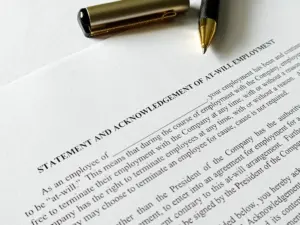
Under California Labor Code §2922, most employment relationships are considered at-will. This means that either the employer or the employee can end the relationship at any time, with or without cause, and with or without notice.
In other words, your employer generally doesn’t need to justify firing you, but only if the reason is lawful. If the termination is discriminatory, retaliatory, or violates public policy, it is not protected under at-will employment.
At-will employment gives flexibility to both sides, but it can also be misused. Many workers assume it strips away all rights, which isn’t true. California law still holds employers accountable for wrongful termination, harassment, and retaliation.
What At-Will Employment Really Means for California Workers

Even though California is an at-will state, several employment laws limit when and how an employer can terminate an employee. You cannot be fired for an illegal reason, such as discrimination or retaliation for asserting your employee rights.
Protected reasons include:
- Reporting unsafe work conditions or labor violations.
- Taking medical leave under the California Family Rights Act (CFRA) or FMLA.
- Filing a wage and hour claim for unpaid wages or overtime pay.
- Participating in an investigation or lawsuit against your employer.
If your employer fired you for any of these reasons, that’s wrongful termination, not an at-will firing.
Why Employers Still Violate At-Will Boundaries

Despite California’s clear laws, employers frequently misuse the at-will doctrine to justify illegal terminations. Common reasons include:
- Cost-cutting layoffs disguised as “performance issues.”
- Retaliation after protected activity.
- Lack of training in compliance with state and federal laws.
These employer violations can destroy careers, but you don’t have to face them alone. WCEL’s legal professionals have the in-depth knowledge and extensive experience to hold employers accountable.
Major Exceptions to At-Will Employment in California
California law provides several important exceptions to at-will employment. These exceptions protect employees so they cannot be terminated for unfair, retaliatory, or discriminatory reasons.
1. Implied Contracts

Even without a written agreement, an implied contract can exist when an employer’s words or actions create a reasonable expectation of continued employment.
Examples include:
- A long history of promotions and positive reviews.
- Verbal promises of job security.
- Written policies that suggest termination only for “good cause.”
Courts often use these patterns to determine whether an implied employment contract overrides at-will status.
2. Public Policy Violations

An employer cannot fire you for reasons that violate public policy, such as:
- Refusing to commit an illegal act.
- Reporting workplace safety issues or wage theft.
- Taking time off for jury duty or voting.
- Exercising a legal right under the California Labor Code.
Firing an employee under these conditions can lead to a wrongful termination lawsuit.
3. Retaliation and Whistleblower Protections

California’s Labor Code §1102.5 protects workers who report illegal conduct, workplace discrimination, or labor code violations.
If your employer retaliates by firing, demoting, or harassing you for reporting wrongdoing, you may be eligible for financial compensation, reinstatement, and punitive damages.
4. Discrimination Protections under FEHA

The California Fair Employment and Housing Act (FEHA) prohibits firing employees based on protected characteristics such as:
- Race, national origin, or religion
- Gender, sexual orientation, or gender identity
- Age (40 or older)
- Disability, pregnancy, or medical condition
Employers that terminate employees based on these traits are engaging in unlawful employment practices. You have the right to pursue a wrongful termination claim under California and federal laws.
Common Misconceptions About At-Will Employment

Even seasoned employees misunderstand what at-will employment allows. Let’s clear up some common myths:
Myth 1: “My boss can fire me for no reason.”
Truth: They can fire you without a reason but not for an illegal one, such as discrimination or retaliation.
Myth 2: “If I quit, I can’t sue.”
Truth: If your working conditions were so intolerable that you were forced to resign, that’s called constructive termination, and it’s actionable.
Myth 3: “Probationary employees have no rights.”
Truth: Even probationary or part-time workers are protected by California’s employment laws from harassment and discrimination.
How At-Will Employment Impacts Wrongful Termination Claims

At-will employment may seem to favor employers, but California’s strong labor protections give employees substantial power. Even under at-will employment, you can still sue for wrongful termination in violation of public policy or retaliatory termination.
For example:
- Firing an employee after they request overtime pay or meal breaks.
- Terminating someone for reporting sexual harassment or workplace discrimination.
- Firing a worker for taking job-protected leave under the CFRA or Medical Leave Act.
- Retaliating against an employee who files a workers’ compensation claim.
These claims often overlap with wage and hour violations, workplace discrimination, or sexual harassment complaints.
At-Will Employment and Employee Contracts
Not every employee is at-will. Written contracts, collective bargaining agreements, or union membership often include clauses requiring “just cause” for termination.
If your contract includes specific job protections or a termination process, your employer must follow those rules. Breaking a written or implied employment contract can justify a wrongful discharge lawsuit.
Steps to Take If You Were Wrongfully Terminated
If you believe you were wrongfully terminated under the guise of at-will employment, take these steps immediately:
- Document everything – Save termination letters, emails, and texts.
- Request your personnel file and pay stubs under Labor Code §1198.5.
- Note any illegal conduct you reported or resisted before termination.
- Contact a skilled employment attorney to review your case.
Your lawyer can file a wage claim, retaliation complaint, or wrongful termination lawsuit depending on the facts.
How West Coast Employment Lawyers Can Help

At West Coast Employment Lawyers, we specialize in employment law matters including wrongful termination, wage and hour disputes, and workplace discrimination.
Our Los Angeles-based law firm has a proven record of representing employees who were wrongfully terminated under false pretenses of at-will employment. We help clients pursue justice and recover damages for lost wages, emotional distress, and future lost wages.
Best of all, we work on a contingency fee basis, meaning no fees unless we win.
Call (213) 927-3700 or fill out our free consultation form today and let our experienced wrongful termination attorneys explain your legal options and fight for your rights.