

Starting a new part-time job is an exciting opportunity to earn income and build experience. But when you are working fewer hours than a full-time employee, questions about benefits, especially sick pay often linger in the back of your mind. Will you be entitled to paid time off if you get sick? Or does that protection only apply to workers who clock in 40 hours a week?
The good news is that California has some of the strongest paid sick leave protections in the country, and yes, part-time employees are entitled to sick pay under state law. Whether you work 10 hours a week or 35, you have the right to accrue and use paid sick leave just like any other employee.
This guide explains what California law requires, how part-time workers earn sick time, the minimum amount of sick leave you are entitled to, and what happens if your employer fails to comply.
Part-Time Employees Are Covered Under California’s Paid Sick Leave Law

California’s Healthy Workplaces, Healthy Families Act (Labor Code §246) establishes the right to paid sick leave for nearly all workers in the state. According to the California Division of Labor Standards Enforcement (DLSE), all employees who work at least 30 days for the same employer within a year in California are covered by the law — including part-time, per diem, temporary, and seasonal employees.
There is no minimum number of weekly hours required. If you work even a few hours per week but hit that 30-day threshold, you are entitled to accrue paid sick leave. This is just one of several California labor laws every worker should know.
How Much Paid Sick Leave Are Part-Time Employees Entitled To?

As of January 1, 2024, California employers must provide at least 40 hours or five days of paid sick leave per year — whichever is greater. This was an increase from the previous minimum of 24 hours or three days.
The “whichever is greater” language matters for employees with non-standard schedules. If you work 10-hour shifts, five days equals 50 hours — so you would be entitled to 50 hours of sick leave, not just 40. On the flip side, if you work short shifts and five days only adds up to 25 hours, you are still entitled to the full 40 hours because that is the minimum floor.
Part-time employees accrue sick leave the same way full-time employees do. The law does not allow employers to provide less sick time to part-time workers just because they work fewer hours per week.
How Do Part-Time Employees Earn Sick Leave?
California employers can provide paid sick leave through one of two methods: accrual or frontloading. The California DIR explains both methods in detail.
Accrual Method
Under the standard accrual method, employees earn one hour of paid sick leave for every 30 hours worked. This applies equally to part-time and full-time workers. If you work 15 hours per week, you will accrue sick time at a slower pace than someone working 40 hours, but you are still earning it with every shift.
The law allows employers to cap total accrued sick leave at 80 hours (or 10 days), and to limit annual use to 40 hours (or five days). However, unused accrued sick leave carries over from year to year — so even if you can only use 40 hours in a given year, your balance can continue to grow up to the cap.
Frontloading Method
Alternatively, employers can choose to provide the full amount of sick leave upfront at the beginning of the year. Under this method, employees receive their entire 40 hours (or five days) at once rather than accruing it gradually.
Here is an important detail for part-time workers: employers who use the frontloading method cannot prorate sick leave based on hours worked. A part-time employee working 20 hours per week is entitled to the same 40 hours of sick leave upfront as a full-time employee working 40 hours per week.
When Can You Start Using Sick Leave?
While you begin accruing sick leave from your first day of work, you cannot use it until you have completed 90 days of employment with that employer. This is a probationary period that applies to all employees, regardless of whether they work part-time or full-time.
After those 90 days, you can use whatever sick leave you have accrued (or been frontloaded) for any qualifying reason.
What Can You Use Paid Sick Leave For?

California law allows you to use paid sick leave for a wide range of purposes, not just when you are personally ill. Qualifying reasons include:
- Diagnosis, care, or treatment of your own health condition
- Preventive care for yourself, such as a flu shot or annual physical
- Diagnosis, care, or treatment of a family member’s health condition
- Preventive care for a family member
- Purposes related to being a victim of domestic violence, sexual assault, or stalking
- Jury duty or appearing in court as a witness (effective January 1, 2025)
“Family member” is defined broadly under California law and includes your spouse, registered domestic partner, child, parent, grandparent, grandchild, sibling, or a designated person of your choosing.
Can Your Employer Require a Doctor’s Note?
Under California law, an employer cannot deny you paid sick leave simply because you did not provide a doctor’s note or other medical certification. You are entitled to take sick leave immediately upon making an oral or written request.
That said, if your absence is foreseeable (such as a scheduled medical appointment), you should notify your employer in advance. For unforeseeable absences, you only need to give notice as soon as practical. If your employer tries to deny your request, you may want to understand whether your boss can deny your PTO in California.
What Are Your Rights If Your Employer Violates Sick Leave Laws?
California law includes strong anti-retaliation protections for employees who use or attempt to use their paid sick leave. Under Labor Code §246.5, your employer cannot:
- Deny you the right to use accrued sick leave
- Discipline, demote, or fire you for using sick leave
- Retaliate against you for filing a complaint or cooperating with an investigation about sick leave violations
- Count sick leave absences against you in an attendance policy
If you are punished for taking legally protected sick leave, you may be able to file a retaliation complaint with the California Labor Commissioner’s Office. The law presumes retaliation if your employer takes adverse action against you within 30 days of you using sick leave or asserting your rights under the law. For more on recognizing and responding to retaliation, see our guide on what to do if your boss retaliates against you.
Can Employers Be Held Liable for Not Providing Sick Pay?

Employers who fail to provide the required paid sick leave or who retaliate against employees for using it can face serious consequences under California law.
Employees can file a wage claim with the Labor Commissioner to recover unpaid sick leave, and employers may be liable for:
- The amount of sick leave that was unlawfully withheld
- Interest on unpaid amounts
- Penalties for failure to provide accurate wage statements (which must show available sick leave)
- Reinstatement and back pay if the employee was wrongfully terminated
- Additional damages in retaliation cases
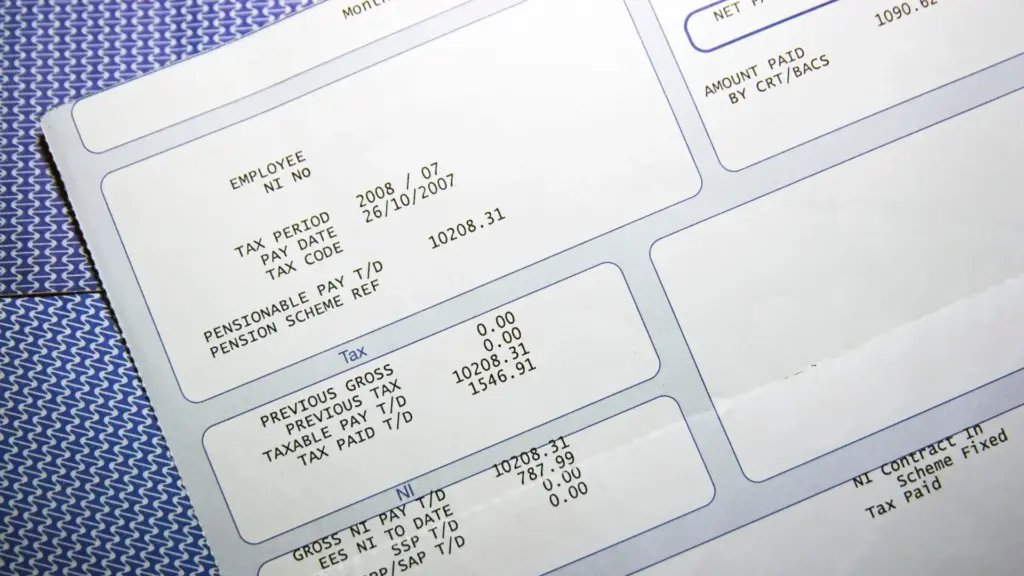
Employers are also required to display a paid sick leave poster in a location where employees can easily see it, and to provide written notice of sick leave balances on each pay stub or in a separate document issued with wages. Failing to do so may constitute one of the common violations of California Labor Code.
What About Federal Law?
There is currently no federal law requiring private employers to provide paid sick leave. The federal Family and Medical Leave Act (FMLA) provides unpaid, job-protected leave for certain medical and family reasons, but it only applies to employers with 50 or more employees and requires employees to have worked at least 1,250 hours over the past 12 months — a threshold most part-time workers will not meet.
This makes California’s state law especially important for part-time employees, who might otherwise have no sick leave protections at all. For a deeper comparison, read our breakdown of California labor laws vs. federal labor laws.
Local Ordinances May Provide Even More Protection
Several California cities, including Los Angeles, San Francisco, Oakland, San Diego, and others have their own paid sick leave ordinances that may require more generous benefits than state law. If a local ordinance requires more sick leave than the state minimum, your employer must comply with the local law.
However, as of January 1, 2024, state law preempts local ordinances on certain technical issues, including how sick leave is calculated and reported on pay stubs. This means you get the benefit of whichever law is more favorable on the amount of leave, while ensuring consistent statewide rules on administration.
Key Takeaways for Part-Time Workers
If you work part-time in California, here is what you need to know about sick pay:
- You are covered. Part-time employees who work at least 30 days per year for the same employer are entitled to paid sick leave.
- You earn one hour of sick leave for every 30 hours worked, or your employer may frontload the full amount at the start of the year.
- The minimum is 40 hours or five days per year, whichever is greater.
- You can use sick leave after 90 days of employment for your own health needs, a family member’s care, or other qualifying reasons.
- Your employer cannot retaliate against you for using or requesting sick leave.
- Employers who violate the law can be held liable for unpaid wages, penalties, and damages.
Know Your Rights And Don’t Let Them Go Unused

Too many part-time workers assume they are not entitled to the same protections as full-time employees. That assumption is wrong under California law, and it can cost you money and peace of mind when you need time off to recover from an illness or care for a loved one.
If your employer has shorted your sick pay, refused to let you use accrued time, or punished you for calling in sick, those are violations you do not have to accept. California law is on your side — but only if you act on it.
West Coast Employment Lawyers fights for workers who have been denied the wages and protections they are owed. Our team has gone up against Fortune 500 companies and recovered over $1.7 billion for employees across California. We take these cases on contingency, which means you pay nothing upfront and owe us nothing unless we recover money for you.
Have questions about sick leave or other wage issues? Call us at (213) 927-3700 or fill out our online contact form to talk through your situation — no pressure, no cost, no obligation.