

If you’re pregnant and have no idea how California’s leave system works, you’re not alone. California offers some of the strongest maternity protections in the country but the system involves multiple overlapping programs that can feel overwhelming.
At West Coast Employment Lawyers, this guide will break down everything you need to know so you understand your rights.
What California Offers to Pregnant Workers

California doesn’t have one single “maternity leave” program, but instead offers several laws and programs that work together. Some protect your job and some pay you while you’re off, but when combined, you could access roughly seven months of job-protected time off. The main programs to remember are:
- Pregnancy Disability Leave (PDL): A program that offers up to four months of job-protected leave while you’re physically disabled by pregnancy and recovery.
- California Family Rights Act (CFRA): A state act that allows up to 12 weeks of job-protected leave to bond with your baby after you’ve recovered.
- State Disability Insurance (SDI): A partial wage replacement insurance program while you’re unable to work due to pregnancy and recovery.
- Paid Family Leave (PFL): Another partial wage replacement designed to cover you while you’re bonding with your baby.
For context, the PDL and SDI cover the disability portion (pregnancy and recovery), while CFRA and PFL cover the bonding portion. They run consecutively, meaning not at the same time, which is how California workers access so much more leave than federal law provides.
Pregnancy Disability Leave: Time Off While Disabled

The Pregnancy Disability Leave (Government Code Section 12945) provides up to four months of job-protected leave when you’re disabled by pregnancy, childbirth, or related conditions. This leave is applicable to all businesses that has at least five employees and to all pregnant workers from day one whether you are part-time or full-time.
For full-time employees, four months of job protected leave equals to 693 hours (40 hours × 17⅓ weeks), meanwhile part-time workers get proportional entitlements. As such, you can take PDL intermittently (hours, days, or weeks) as medically necessary.
Once your pregnancy ends and you have recovered, you’re entitled to return to your same position, or a comparable one if yours was eliminated for legitimate business reasons unrelated to your leave.
What Counts as Disability Leave in Terms of Pregnancy?
PDL covers any period where you’re actually disabled during pregnancy and this includes things such as severe morning sickness, doctor-ordered bed rest, prenatal appointments, childbirth, recovery, and postpartum depression.
Your healthcare provider certifies when you’re disabled and for how long and for uncomplicated deliveries, standard recovery is six weeks (vaginal) or eight weeks (cesarean). If you need more time, your doctor can certify additional disability leave. In addition, your employer must also continue your group health insurance during PDL so that no complications can occur.
California Family Rights Act: Bonding Leave

Once you’ve recovered from childbirth, the California Family Rights Act (Government Code Section 12945.2) provides up to 12 weeks of job-protected leave to bond with your baby. However, it is important to note that the CFRA has stricter requirements than PDL because in order to qualify you need to have worked at least 12 months with your employer and 1,250 hours worked in the prior 12 months (roughly 24 hours/week).
Why PDL and CFRA Don’t Overlap
Under CFRA, pregnancy is not a “serious health condition” and while this sounds strange but it actually benefits workers who have been working a position for a significant time because you are able to take your full four months of PDL first, then your full 12 weeks of CFRA bonding leave after recovery.
Compare that to federal FMLA, where pregnancy and bonding share a single 12-week entitlement, California workers can access nearly seven months. In addition both parents are entitled to CFRA leave, if you and your partner both work for covered employers.
The SDI and Paid Family Leave
The leave laws protect your job but they don’t guarantee pay. However, in order to fill that gap, California’s wage replacement programs offers an insurance program to ensure new families don’t have to worry about their finances.
State Disability Insurance
The SDI provides partial wage replacement when you can’t work due to pregnancy and recovery.
- Eligibility: You must have earned at least $300 in wages (with SDI taxes withheld) during your base period, which is roughly 5-18 months before your claim.
- Benefit amount: In 2026, SDI pays 70%-90% of your wages depending on income. Workers earning under about $65,000 annually receive closer to 90%. Maximum weekly benefit: $1,765.
- Duration: Your doctor certifies how long you’re disabled. Typically up to 4 weeks before your due date and 6 weeks after vaginal delivery (8 weeks for cesarean)
- Waiting period: 7-day unpaid waiting period at claim start.
Paid Family Leave
Meanwhile, the PFL provides wage replacement while bonding with your baby, after you’ve recovered from pregnancy disability.
- Eligibility: Same as SDI, paid into the system through payroll deductions.
- Benefit amount: Same formula as SDI: 70%-90% of wages, up to $1,765 weekly.
- Duration: Up to 8 weeks within any 12-month period.
- Important: PFL provides money, not job protection. You need CFRA (or another law) to guarantee your job will be waiting.
A Typical Timeline
Here’s how everything fits together for an uncomplicated pregnancy:
- Weeks 1-4 before delivery: You stop working around 36 weeks. PDL protects your job; SDI pays you.
- Delivery and recovery (6-8 weeks): Still on PDL and SDI while recovering.
- After medical clearance: Your doctor clears you. Pregnancy disability ends, but you want to bond with your baby.
- Bonding leave (up to 12 weeks): CFRA protects your job; PFL pays you for 8 of those weeks. The remaining 4 weeks are unpaid unless you use accrued time off.
- Total: Approximately 22-24 weeks (5-6 months) with partial pay for most of it and job protection throughout.
What You Need to Do To Get Maternity Leave
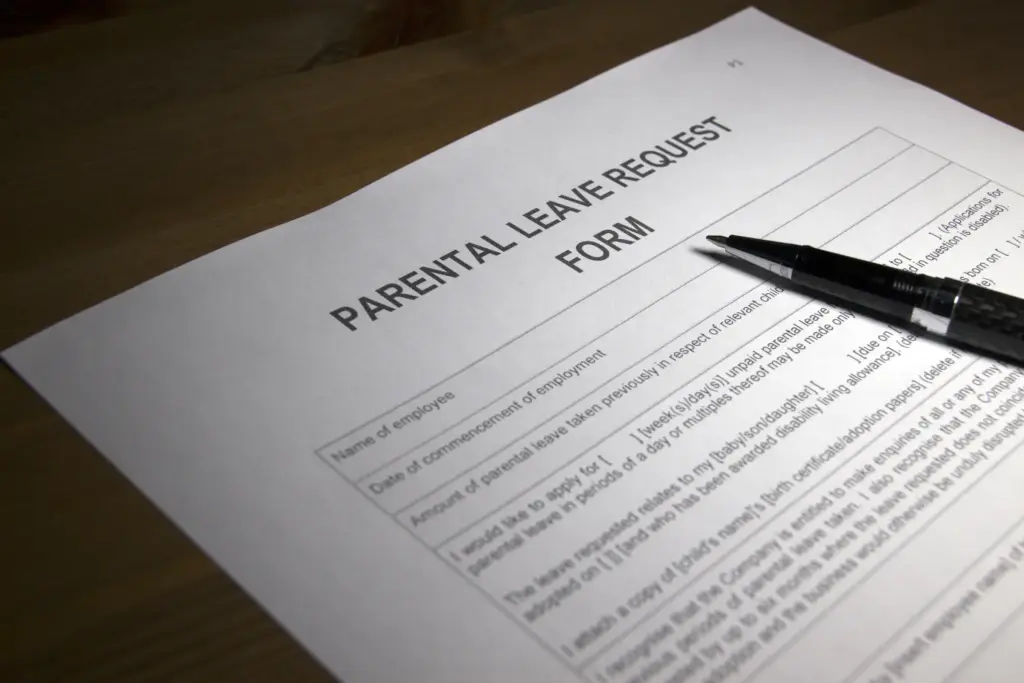
In order to properly get maternity leave from your employer, you must provide at least 30 days’ notice before foreseeable leave. Tell your employer when you expect to start, clarify which leave types you’re using, and confirm your health insurance will continue.
Due to administrative reasons, your employer may require certification from your healthcare provider confirming your disability and expected duration. You must get at least 15 days to provide this. In addition, wage replacement claims go through the California Employment Development Department (EDD), not your employer.
- For SDI: File between 9-49 days after your disability begins. Filing online at myEDD is fastest.
- For PFL: After SDI ends, you’ll transition to PFL for bonding. EDD typically sends paperwork to facilitate this.
What to Do When Things Go Wrong
California law prohibits retaliation for taking pregnancy leave and discrimination based on pregnancy. If your employer fired you, demoted you, cut your hours, or treated you worse because of your pregnancy or leave, that’s illegal and you can file a complaint with the California Civil Rights Department or consult an employment attorney.
Talk to West Coast Employment Lawyers

At West Coast Employment Lawyers, we’ve recovered over $1.7 billion for workers facing pregnancy discrimination and wrongful termination. Our team includes Harvard Law graduates and former federal prosecutors who have beaten the largest corporations in the country.
If your employer denied your leave, fired you for being pregnant, or retaliated against you for asserting your rights, call (213) 927-3700 or fill out our online contact form to speak directly with a lawyer about your options.
FAQs About California Maternity Leave
Is California Maternity Leave a Paid Leave?
The leave itself is unpaid, but SDI and PFL provide partial wage replacement (70%-90% of wages, up to $1,765/week in 2026).
Do I Need to Work a Certain Time to Qualify?
For PDL, you're eligible immediately, however for CFRA, you need 12 months of service and 1,250 hours worked.
Can My Employer Fire Me While Pregnant?
Firing someone because of pregnancy is illegal. But employment is at-will, so termination for legitimate, non-discriminatory reasons is still legal. If pregnancy was a factor, consult an attorney as soon as possible to get a better understanding of your situation.
Does My Employer Have to Hold My Exact Job When I Go On Maternity Leave?
You're entitled to your same position from when you left for maternity leave. However, if your position was eliminated for legitimate business reasons unrelated to your leave, then your employer has to give you a position that is comparable to your last one.